How we make a film with AI

The models are available to everyone. What follows is the part that is not: how a director, an art team and an editor turn thousands of generated takes into a series a brand can broadcast. Below is one production, start to finish, then the rules we apply to all of them.

Case · Tmall 11.11 Series · 15 episodes · autumn 2026

Fifteen episodes, eighteen characters, five weeks.

A comic quest in the style of a Chinese mythological animated feature, with the Tmall cat and a cast of brand mascots. Every frame generated; nothing filmed. Case page

1. Write the world down before generating anything

One paragraph set the look and the acting style for the whole series. It was pasted, word for word, into every shot brief that followed — so a hundred shots made by eight people over five weeks belong to one film.

东方神话奇幻仙侠三维动画电影,超越现实的巨大建筑尺度。中国画式的空间层次,强调远近递进、留白和剪影。超写实材质质感,光影强烈、直接,有明确光源,真实。使用 ARRI ALEXA LF 摄影机及 Anamorphic 变形宽银幕镜头拍摄,大光圈,浅景深。卡通喜剧风格的表演,由性格驱动的全身表演,鲜明的重心与步态,具有重量和惯性的夸张动作,清楚的蓄力、爆发与收势,武术招式结合动物身体特征,快慢交替和短暂停顿形成喜剧节奏,眼神先于语言作出反应。

A 3D animated feature in the Eastern-mythology xianxia tradition, with architecture at a scale beyond the real. Spatial layering in the manner of Chinese painting: receding planes, negative space, silhouettes. Hyper-real materials; strong, direct light from one clear source. Shot as if on an ARRI Alexa LF with anamorphic lenses, wide open, shallow. Cartoon-comedy acting driven by character: a clear centre of gravity and gait, exaggerated movement with weight and inertia, legible wind-up, release and recovery; martial-arts moves built on each animal's body; comic rhythm from fast, slow and short holds; the eyes react before the words.

2. Lock the cast as reference assets

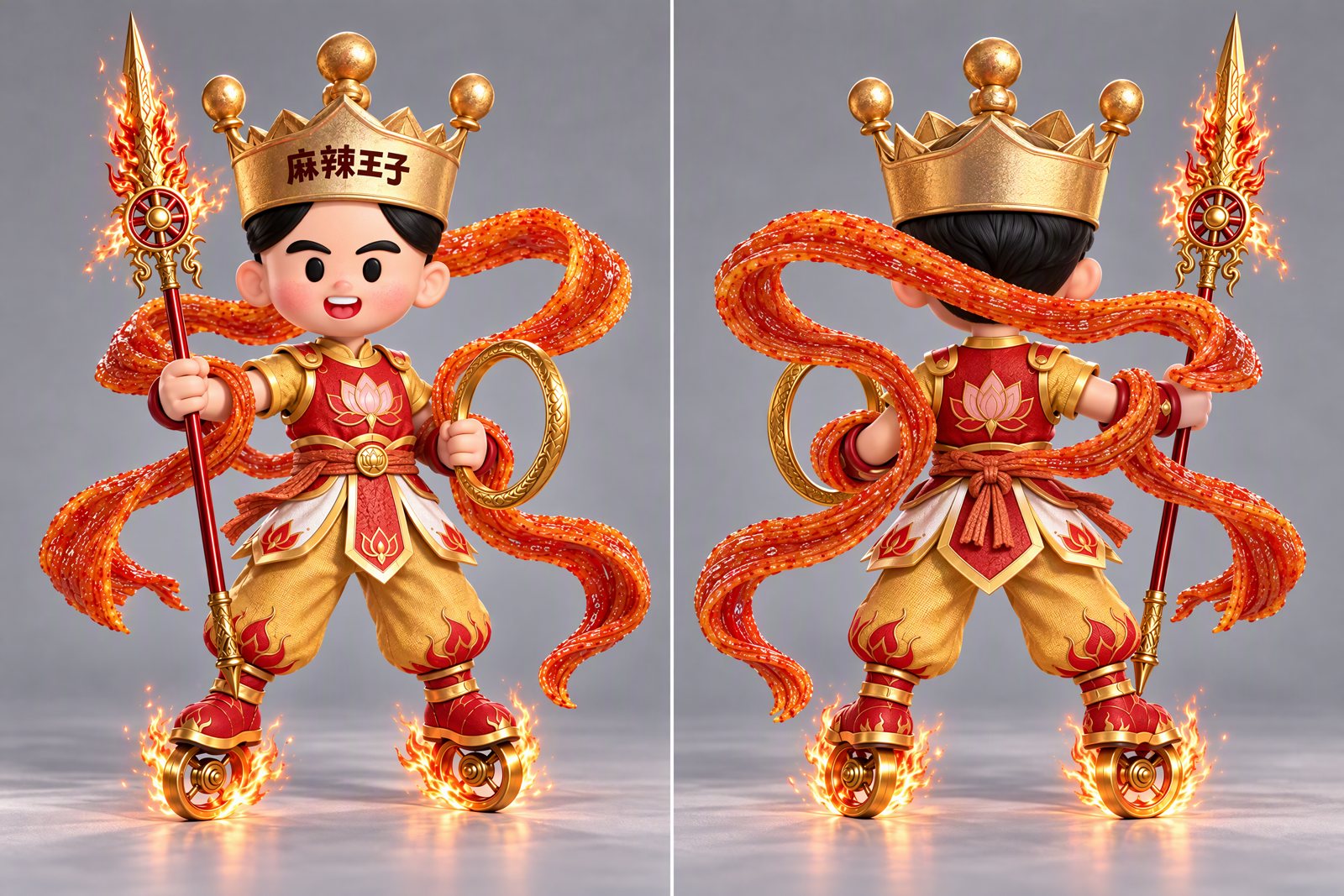
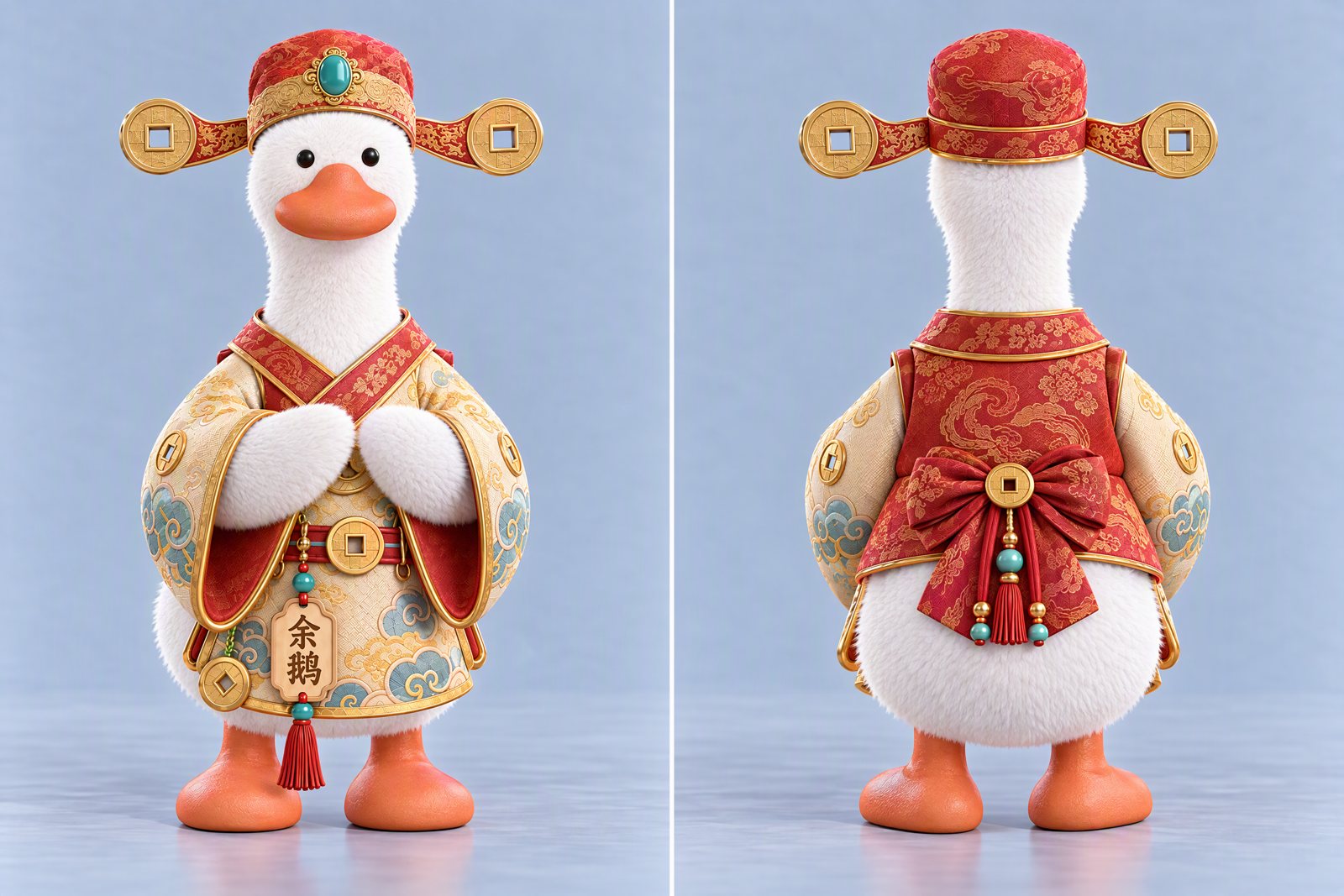
Each character was designed in turnarounds and saved as a reference asset. Shot briefs call the asset by name and forbid changes to species, build, face, costume and colour. Variants were made for specific scenes — a wet version, a version without the sword hilt — rather than letting the model improvise.
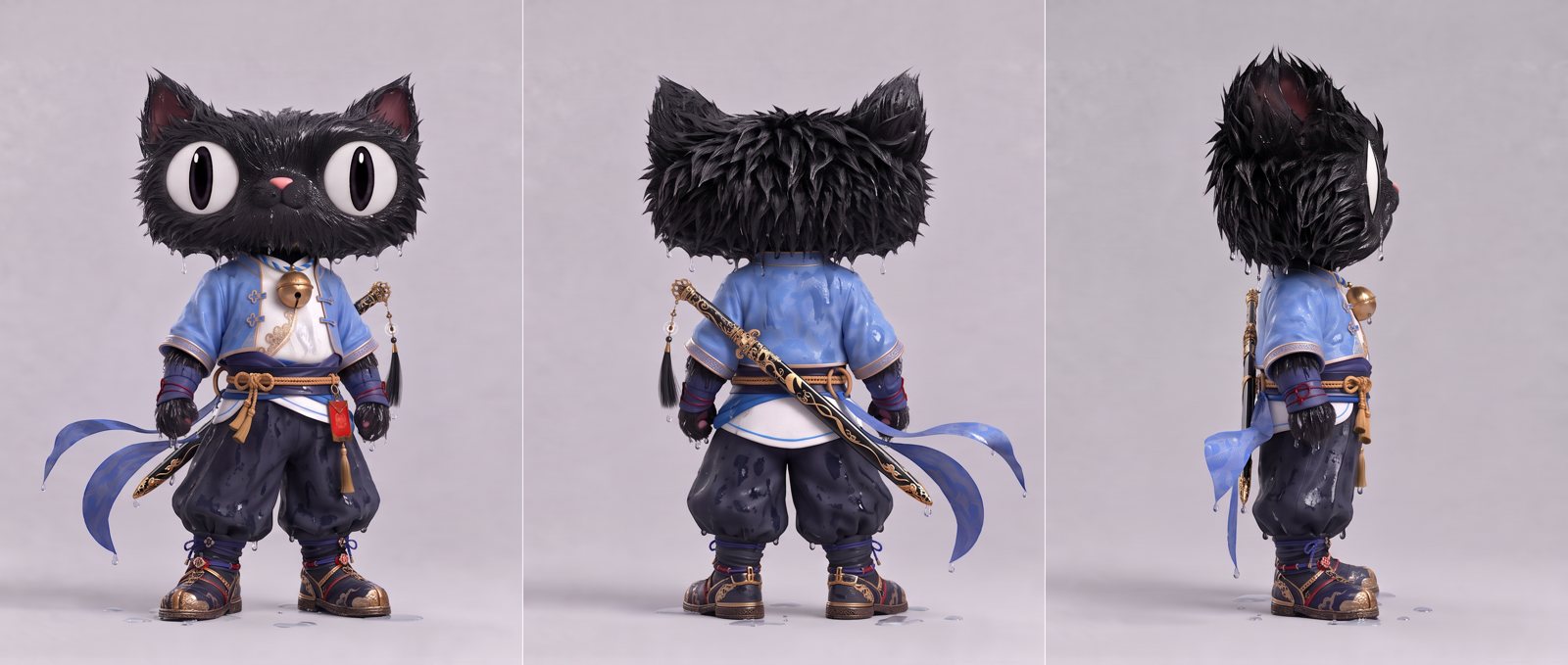
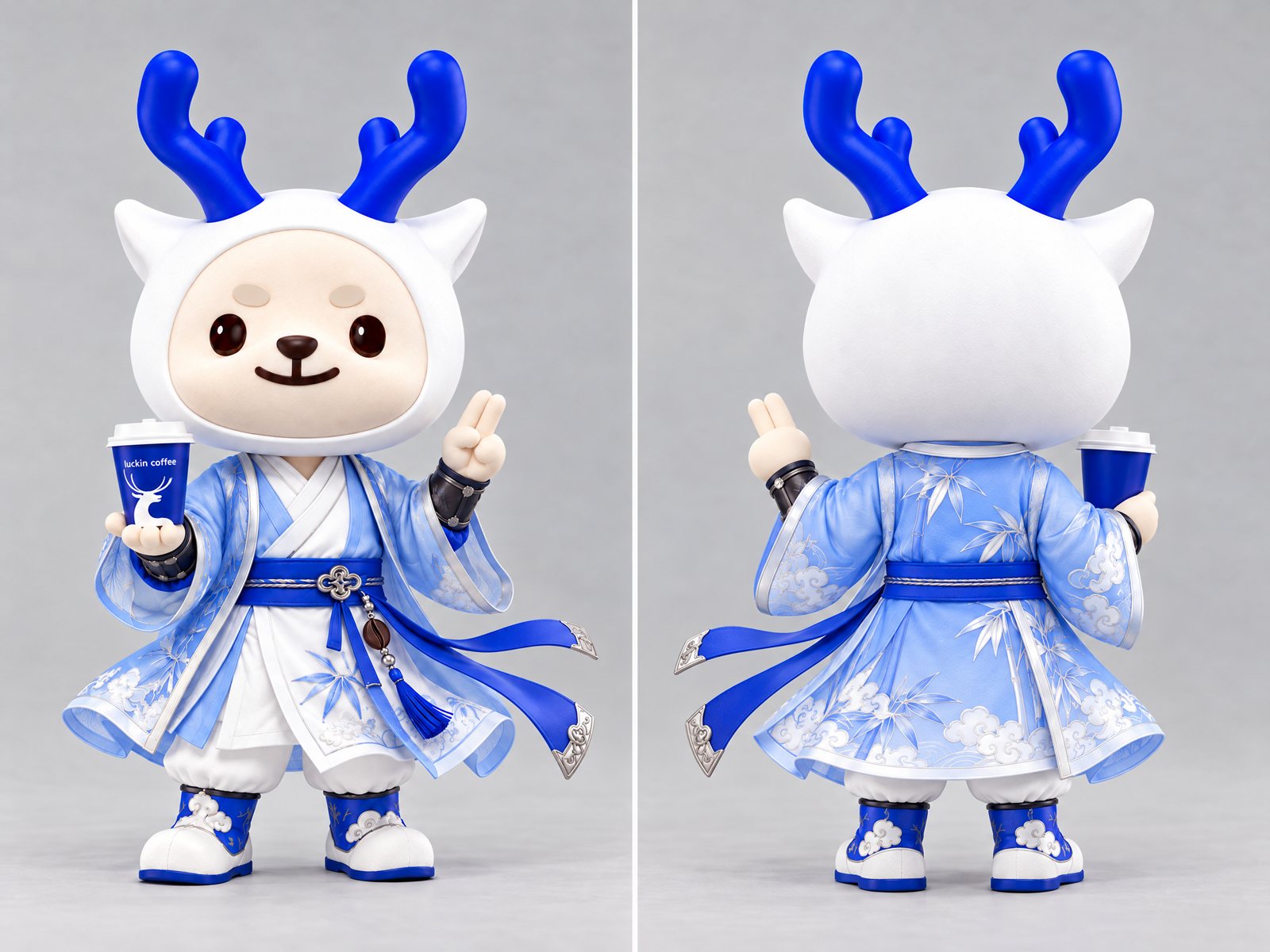
1,240 image generations went into design and look development before and during production.

Turnaround of the Tmall cat character in a blue robe with a sword
Turnaround of a white deer character in blue robes
Turnaround of a crowned child character with fire ribbons
Turnaround of a goose character in a red and gold robe

3. Storyboard, then brief every shot like a live-action shot

Episodes were boarded in line art, colour-coded by character. Each shot then got a written brief: scene and time of day, number of cuts and where they fall, lens angle per cut, blocking and screen direction, a performance beat for every character on screen, the physics of each step, the light, the sound, and a list of things that must not happen.

The brief for one ten-second, two-cut shot runs to 3,163 characters. That is not a prompt. It is a shot list, and it is why the result looks directed.
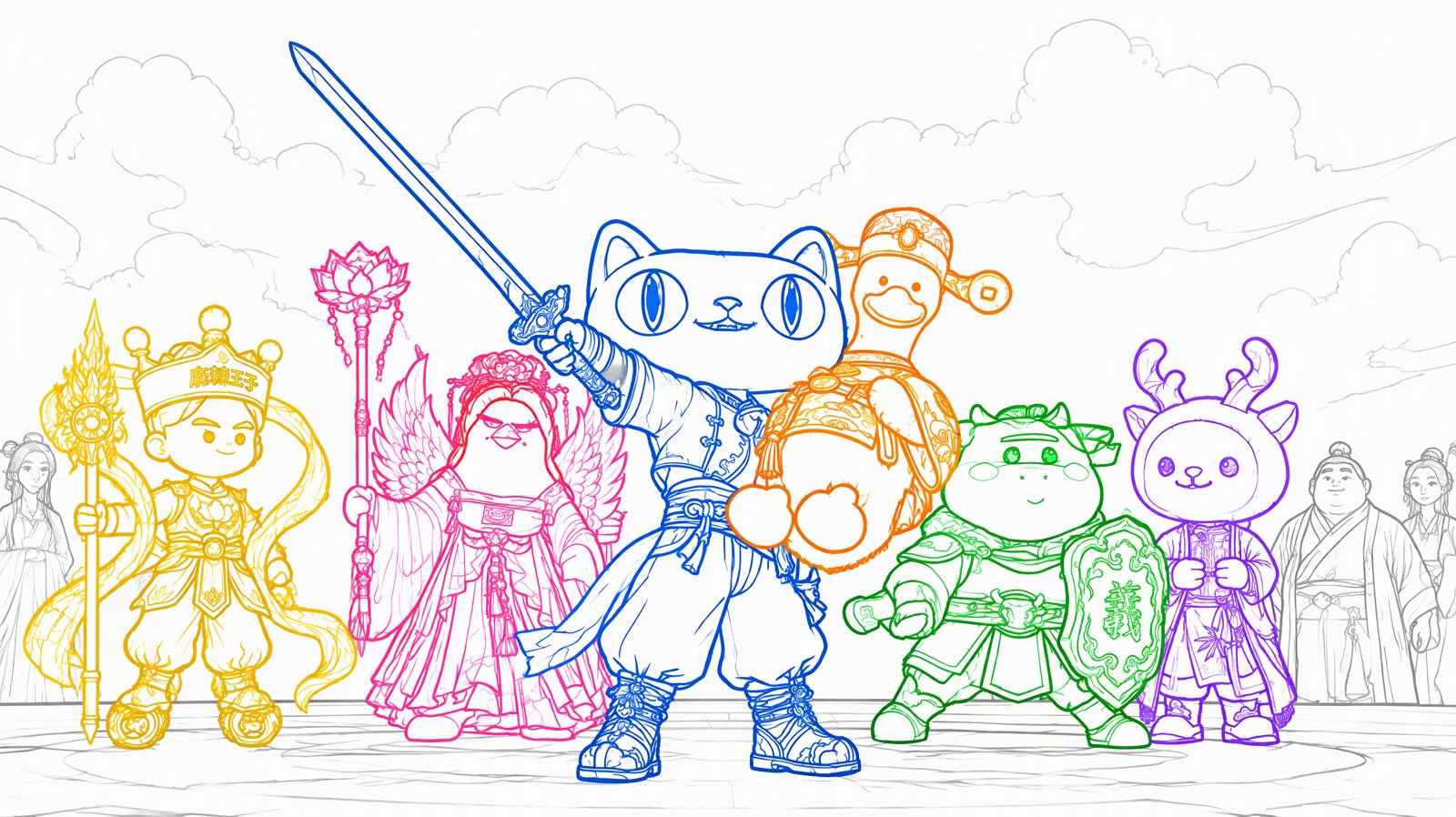
Line-art storyboard of the full cast, each character drawn in a different colour
Read the brief for episode 9, shot 4 (original Chinese)

【固定视觉与表演风格】 东方神话奇幻仙侠三维动画电影……(同上)全片无音乐,有声效,台词。

【场景概述】 白天。猫天天、托咖天王、麻辣三太子、太乐鲜姑沿陡峭山道奋力赶往山顶,转过山路弯口,终于看见富丽堂皇的高价宫。短暂停步仰望后,四人继续向上赶路。重点表现爬山的吃力、救人的急迫,以及目的地终于出现。攀登过程通过当前陡坡和身后远山交代,不在十秒内跳转多座山峰。

【输出设置】 横屏16:9,总时长10秒,实时动作,两个受控镜头。0—4秒:四人攀登的中全景。第4秒动作匹配硬切。4—9秒:四人与山顶高价宫的大远景。第9秒画面定格,9—10秒显示倒计时字幕。无对白,无旁白,无音乐。仅保留呼吸、脚步、衣料和自然环境音效。

【当前参考】 猫天天、托咖天王、麻辣三太子、太乐鲜姑:各自主体引用。高价宫山道外景:场景图引用。四名角色的身份、服装、体型、动物身体特征及已有装备严格匹配各自参考,不增加道具,不互换装备。场景参考控制高价宫外观、山体坡势、道路走向、植被、材质与日光方向。

【空间布局与首帧】 一条山道沿同一面陡峭山坡持续向上,通往山顶高价宫。主体道路为泥土、碎石和不规则石蹬组成的山间步道,接近宫门的位置才连接规整石阶。四人前后错落向上攀登:猫天天领头,麻辣三太子随后,托咖天王与太乐鲜姑跟在后方。首帧四人已经全部在画面内。摄影机位于山道外侧,斜看四人的侧前方。行进方向为画面左下向右上,后续镜头保持此方向。

【镜头形式、光学与焦点】 镜头一采用47°自然透视中全景,完整看见四人的身体、脚部落点和山道坡度。镜头二采用84°广角大远景,四人位于画面左下方,高价宫位于右上方,建筑整体宽度约占画面四分之一。建筑直线稳定,无鱼眼变形。

【动作时序、摄影机与表演】 镜头一|0—4秒|吃力赶路:摄影机沿山道外侧平顺跟随上移,不超越领头的猫天天。猫天天身体前倾,目光先寻找下一处落脚点,踏上较高石蹬后用后腿蹬地……麻辣三太子急着跟上……托咖天王以稍慢但扎实的节奏攀登……太乐鲜姑踩过路边碎石,略展开双翼辅助平衡,确认站稳后收拢;她同样步行攀登,不起飞、不悬浮。四人步态与喘息错开,有疲惫但不停滞,不整齐踏步。镜头二|4—9秒|终于看见高价宫:在猫天天踏上转弯石面的动作上硬切至四人后侧的大远景……9—10秒|定格与倒计时:在画面下方中央叠加字幕「距离福梨盛会还有:四个时辰。」浅金白色配细暗描边。

【物理与材质】 每一步先落脚,再转移重心、蹬地上升。脚掌贴合石面,避免踩空、滑步和身体无重量漂浮。衣物、羽毛与随身装备保持连续,不因切镜换位置。

【光线】 沿用场景参考中的白天日光方向,两镜世界光源一致。金色建筑不过曝。薄雾集中在远处山谷。

【声音】 只有四人错开的喘息、鞋底与土石摩擦、踏上石蹬的脚步、衣料和装备轻响,以及低弱山风声。切到大远景后,人物声随距离适度减弱。

【正向约束】 只出现四名角色。高价宫始终位于山路上方。不生成贯穿整座山的宽大宫殿阶梯,不瞬移到宫门,不提前进殿。仅第9秒开始定格。

4. Generate drafts, choose, then generate for real

Shots were first generated as low-resolution drafts — often eight versions of the same shot in a morning — and reviewed against the brief. Only the chosen version was regenerated at full resolution. The model never picked its own take.
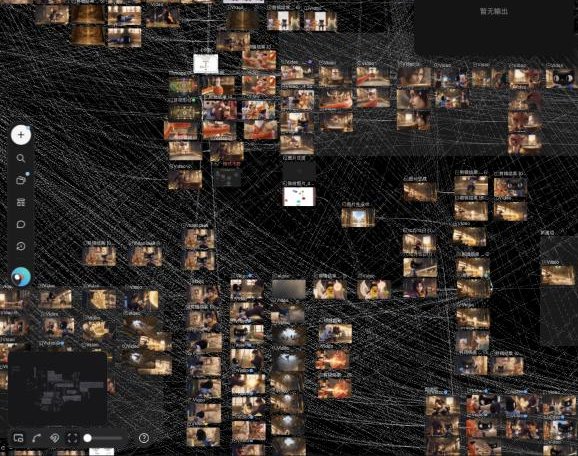
1,408 video generations across the series: 1,024 at draft resolution, 239 at final resolution, the rest for fixes. Mostly Seedance 2.5, with Kling and others where they suited a shot.

Overview of a production canvas: hundreds of generated frames connected by reference lines
The canvas for episodes 10–14: 765 nodes, 564 video generations. Every line is a reference carried from one shot to the next.

5. Fix shot by shot

Client notes went into a dedicated pipeline rather than back to the start: a character swapped in a finished shot, a tail removed, on-screen text changed, a prop corrected. Each fix is a versioned pass on the approved shot, so continuity survives the notes.
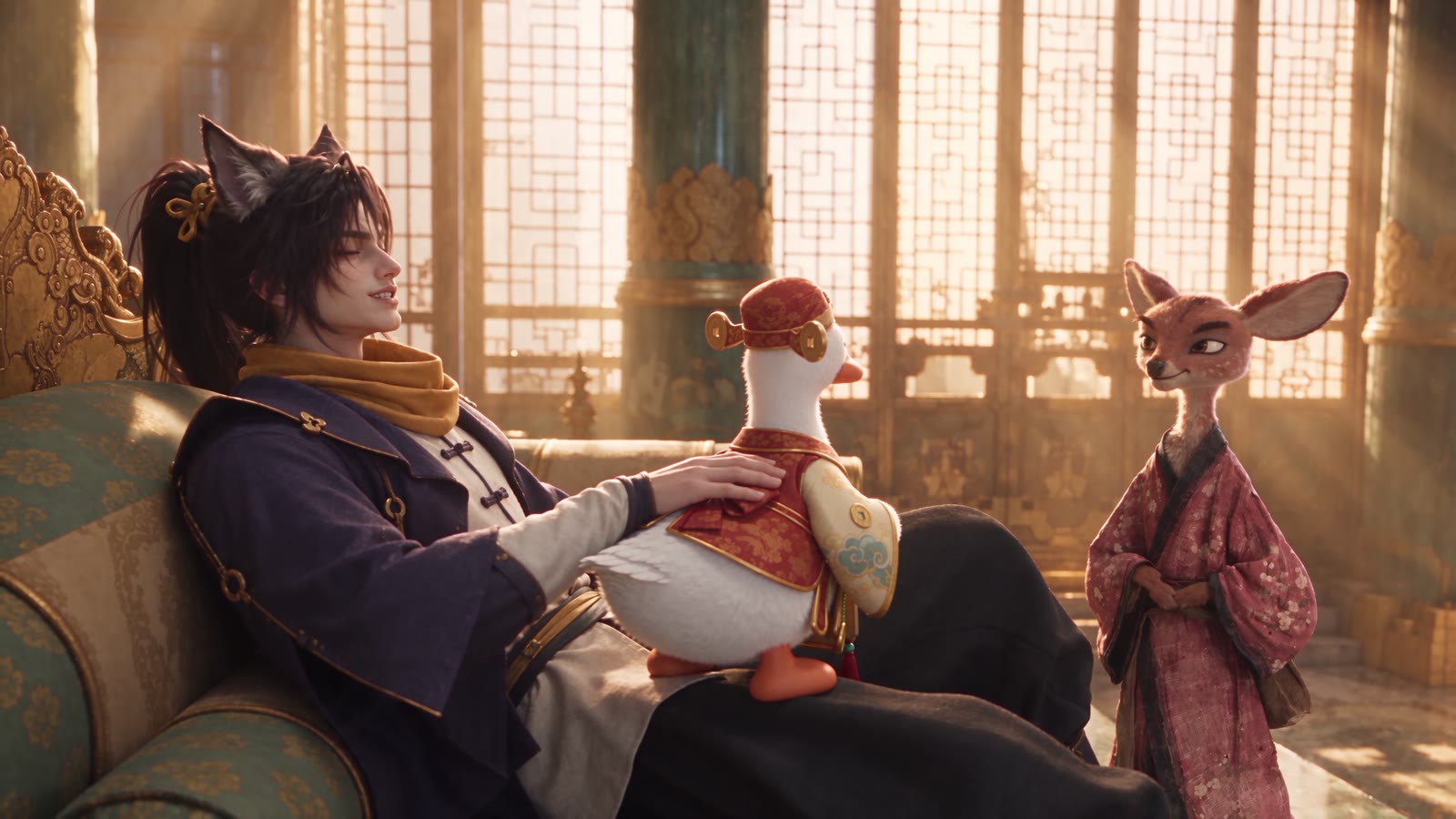
Finished frame: the villain seated in a golden palace with a goose and a deer
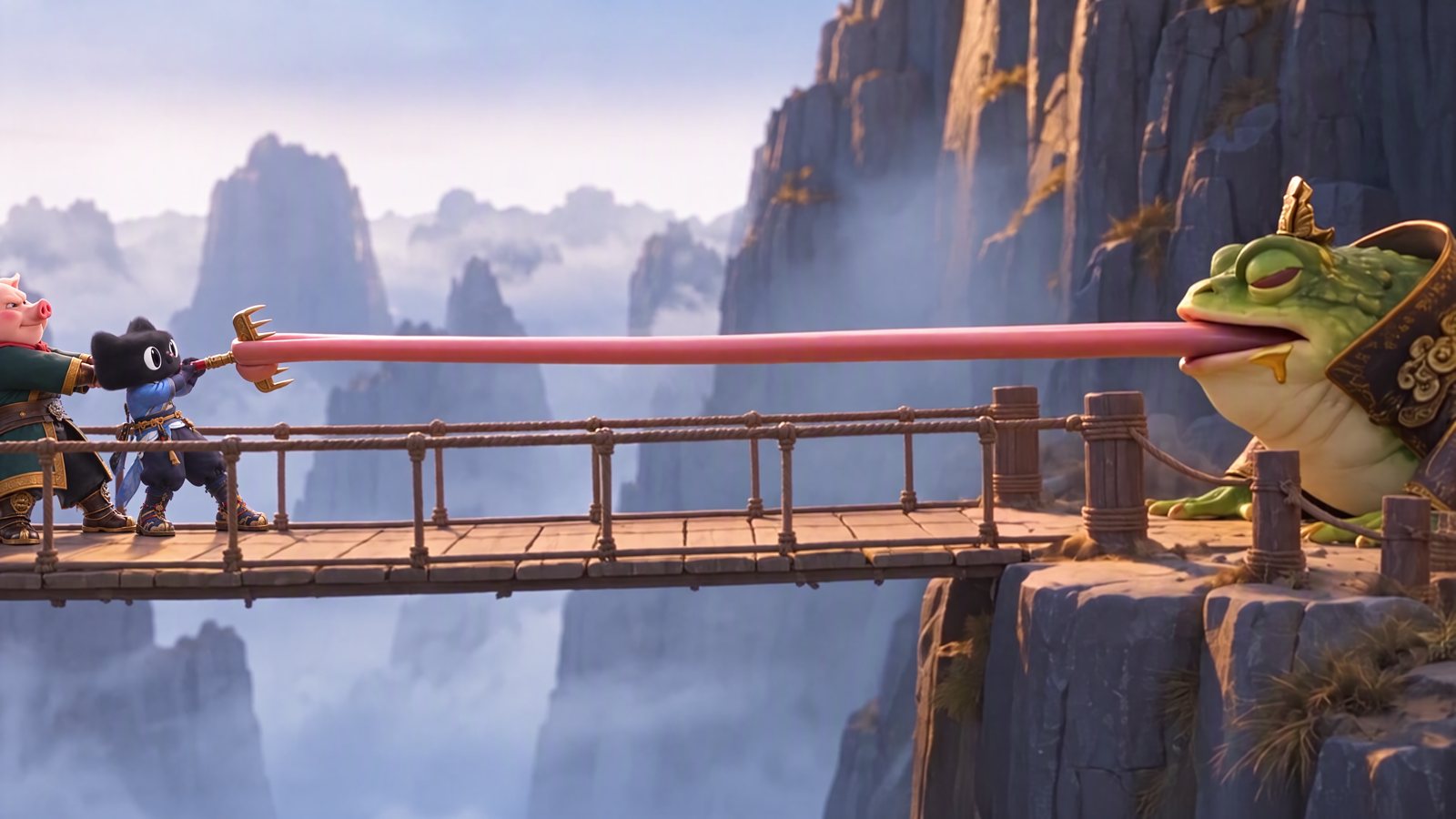
Finished frame: a frog character's tongue stretches across a rope bridge in the mountains

6. Finish like a film

Approved shots were upscaled to 4K at 24 frames per second, then edited, mixed and graded outside the generation tools. Voices and music are decided by the director, not by the model.
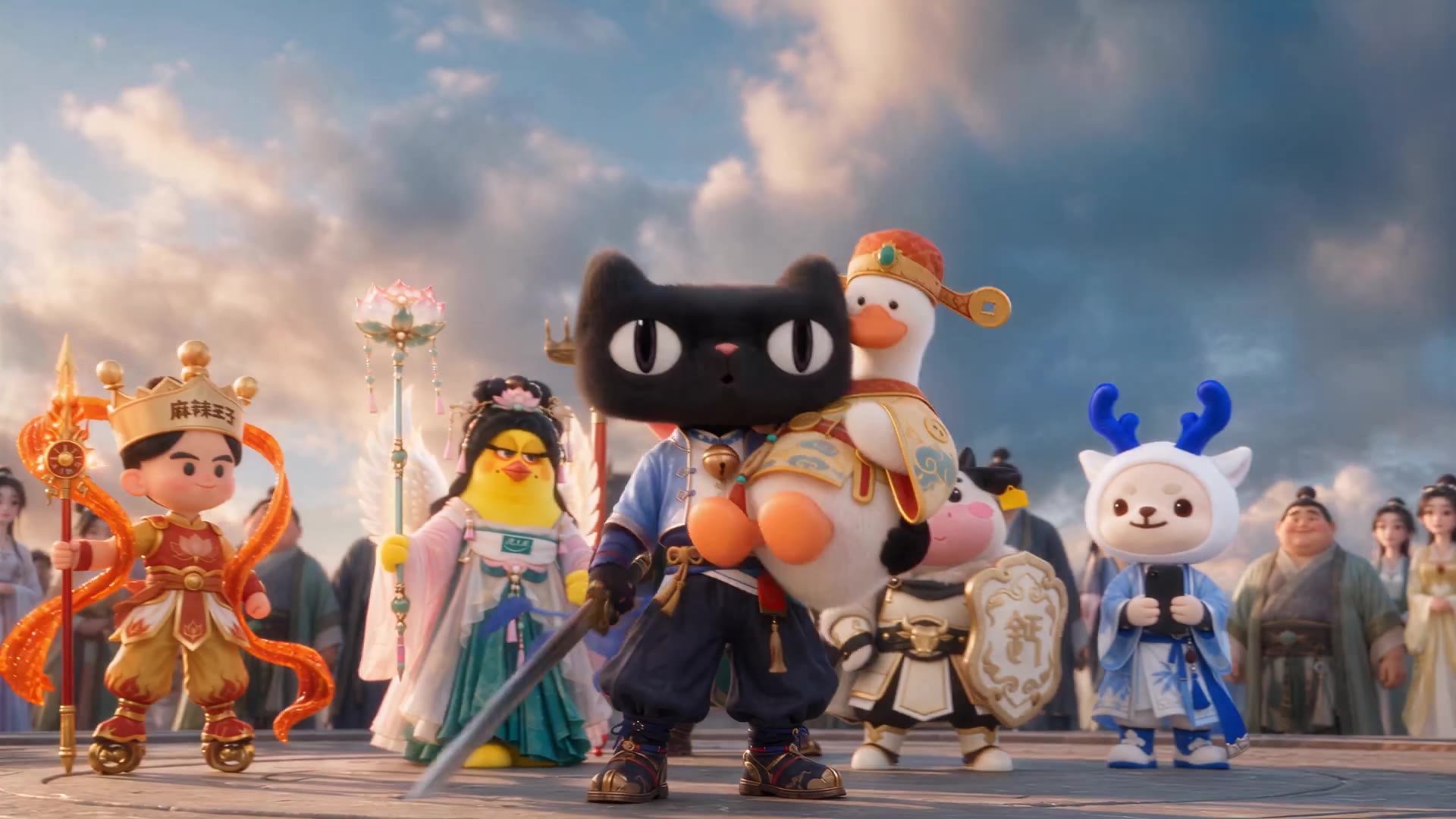
Finished frame from the 4K pass
A four-second shot after the 4K pass (shown here at 1080p). Hover to play.

By the numbers

From the production canvas, September 23 to October 28, 2026.

The rules, for every project

  1. 1

    Direction first

    A director owns the film: story, tone, references, shot list. Nothing is generated until the boards are approved. This is the step most AI production skips, and it is the one that decides whether the result looks like a film or a demo.

  2. 2

    Look development

    Style frames, character sheets and environment keys are iterated with the art director until a visual bible is locked. For products, we rebuild the hardware as reference so it stays faithful in motion.

  3. 3

    Generation and curation

    Shots are generated across several video models — we pick per task, not per vendor. Hundreds of takes per shot are normal. Editors curate; the model never picks its own take. Each project's credits list the models used.

  4. 4

    Continuity

    Characters and sets are held consistent with reference assets and, where needed, 3D and compositing. Homeward keeps one character steady for twelve and a half minutes; the Tmall series keeps eighteen across fifteen episodes.

  5. 5

    Human finishing

    Edit, sound design, music, colour, VFX clean-up and typography are done by people. Voices are recorded actors unless a synthetic voice is agreed in writing.

  6. 6

    Review and revisions

    Scheduled rounds, usually two or three, each with a changelog. Refinements are included; structural changes are scoped separately, so there are no surprises in the invoice.

  7. 7

    Rights and disclosure

    We document models and licences for every project and deliver a provenance sheet with the master. We do not generate real people's likenesses without written consent. We support AI disclosure labelling where you need it — FTC guidance, the EU AI Act, platform rules — and we label our own work on this site.

How long it takes

A 30–90 second brand film typically takes three to four weeks from approved script to master. A set of four launch films takes six to eight. A fifteen-episode series took five weeks. Live action and hybrid projects follow conventional production schedules.

Prototype 0.2 · 2 Nov 2026 · low-res preview media